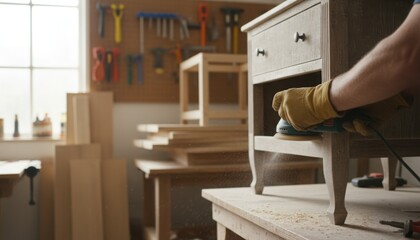
Cabinet Refacing Sacramento offers a budget-friendly solution for homeowners who want to refresh their kitchen. It preserves existing cabinet structures and greatly reduces waste.
The first step in a successful refacing project involves accurate measurements of all exposed cabinet surfaces. This ensures that new materials fit properly, reducing costs and time spent on rework.
Solid Wood
Solid wood is a luxurious cabinet refacing material with a high-quality aesthetic that complements many design styles. This material is available in a wide range of species, colors, and finishes, providing a custom look that suits your specific design goals. It also demonstrates your commitment to sustainable home improvement, as it reduces waste through reuse and supports fair labor practices. Solid wood is durable and can last for decades with proper care. However, it is susceptible to expansion and contraction in environments with changing moisture levels.
Refacing is a challenging DIY project that requires careful planning and execution to achieve a quality result. Common mistakes homeowners make during this process include skipping surface preparation, incorrect measurements, and using incompatible materials. Taking the time to learn more about cabinet refacing materials and vendor options can help prevent these errors before starting your renovation.
To ensure a seamless refacing installation, it’s best to work with a professional. They can guide you through the refacing materials and vendor selection process, ensuring that your kitchen will look beautiful and functional for years to come. They can also provide guidance on cabinet refacing care and maintenance to protect your new veneer or laminate.
When refacing cabinets, the first step is to remove existing doors and drawer fronts. Then, clean surfaces with mild soap or wood-cleaning products to prepare them for application. Sanding may be required to smooth rough or sharp edges. Once the face frame is prepared, begin by applying adhesive to the surface. Then, adhere the veneer. When applying veneer, it is important to press firmly with a roller, removing air bubbles and ensuring a smooth finish.
After completing the face frame, apply veneer to the sides of each stile and rail. Be sure to use short brads that won’t penetrate the side of the cabinet. To finish the job, trim excess veneer from the edges of the cabinet with a utility knife or laminate trimmer. It’s a good idea to measure the sides of each cabinet before cutting veneer to ensure a perfect fit. If the ends of a piece of veneer are too long or too short, they can be cut to length with a table saw.
Medium-Density Fiberboard (MDF)
Wood cabinet refacing is a popular option for homeowners who are looking for classic, modern, or transitional aesthetics. It’s available in a variety of species and cut options, with a wide range of finishes (matte, gloss, or natural oil). The best type of wood for your cabinets will depend on your priority for authenticity and organic grain vs. uniformity and sustainability.
While solid wood cabinets offer the highest level of performance, they’re more prone to warping in humid environments like kitchens. Veneer is an attractive and affordable alternative that delivers the same beauty as solid wood while offering increased durability, stability, and moisture resistance.
MDF is a common building material that combines broken down hardwoods and softwoods with resin and wax before pressing into sheets. It has a smooth, dense surface that’s ideal for painting and can be used in a variety of decorative applications, like furniture or custom cabinetry. Because of its durability, MDF is a popular choice for door cores and interior paneling.
Unlike plywood, MDF is manufactured with a uniform density throughout, making it an excellent substrate for veneers. This quality, coupled with its affordability and ability to be carved, sliced, and machined, makes it a popular choice for furniture-making, cabinetry, and wall paneling.
MDF is also a better alternative to plywood for projects that require detailed craftsmanship and precise machining. This is because the uniform density of MDF prevents knots and rings from telegraphing through the veneer, as they can with plywood.
MDF veneer offers a more consistent look than solid wood, which is important for projects that require high levels of detail and finishing. Additionally, MDF is more resistant to moisture than solid wood, which means it can last longer in a damp environment, like a kitchen. Moreover, the fact that one log can produce dozens of sheets for use in a project minimizes the amount of natural resources needed to build a cabinet. This is great news for eco-conscious homeowners. It’s also easier to work with for skilled craftsmen, as it can be cut and shaped into a variety of shapes without losing its strength or durability.
Non-Adhesive Paper Back Veneer
As the name suggests, this cabinet refacing material consists of paper-backed veneer that can be attached to a variety of surfaces. These include MDF, particle board, plywood, Masonite, melamine and even drywall. This type of cabinet refacing material is ideal for those who want to change the look of their kitchen without the expense of a full remodel. It can also be used to update cabinets that are in good shape, but just need a fresh coat of paint.
Paper-backed veneers have a thin layer of paper that keeps multiple wood veneer faces in place and adds stability to the sheet. This allows them to be cut with a utility knife or table saw, and it gives the material flexibility. It also makes it easier to attach the veneer to curved surfaces, which is often necessary for face frames. Paperback veneer sheets are available in various thicknesses, with 10 mils recommended for most projects. Higher thicknesses, such as 20 mils, may be better for curved or irregular surfaces.
Like other types of laminate, wood-backed cabinet refacing materials have the advantage of resisting moisture and providing an attractive finish. The added benefit is that they’re less prone to warping and cracking with changes in humidity, making them a great option for high-traffic areas. The core can be made of either solid or MDF, and it’s important to choose a quality product that has been tested for durability and safety.
While choosing cabinet refacing materials, consider the style and design of your kitchen to make sure that the chosen veneers match its decor. For example, modern kitchens may benefit from sleek 3D laminates, while traditional kitchens can look good with natural-looking wood back veneers.
While solid wood is a popular choice for kitchen cabinet refacing, other materials provide a wide range of benefits. For instance, MDF is sturdy and can be painted to match the existing color of the kitchen. It’s also cheaper than solid wood and more versatile, allowing you to create a unique design for your home. In addition, it’s easy to work with and can be sanded down for a smooth surface.
Decorative Laminate
Decorative laminates are durable, affordable and offer a beautiful wood-look. Available in a variety of textures, patterns and colors, these materials can be used to achieve a variety of design styles. They are perfect for contemporary, modern and retro kitchens but also work well with traditional and rustic designs. Cabinet refacing is ideal for homeowners who want to give their kitchens a face-lift without breaking the bank.
Unlike wood cabinets, which require regular maintenance and upkeep, laminates are easy to clean and durable. They can withstand heavy use and high moisture levels without warping or cracking. Additionally, they do not contain harmful chemicals, VOC’s or paint, making them a safer and healthier option for your home.
The choice between wood and laminate for your cabinet refacing depends on your desired style, budget and durability. Wood cabinets are a more expensive option, but they provide a timeless look that can stand the test of time. They are crafted from broad-leaf or needle-bearing trees, and can be finished in either a hard or soft finish. Hardwood cabinets are more durable, but are more prone to warping if exposed to heat and moisture.
Medium-density fiberboard (MDF) cabinet refacing is an inexpensive alternative to wood cabinets, and provides a smooth surface that’s ideal for painting. MDF is made using wood fibers and resin, creating a dense board that’s resistant to damage and warping. While MDF is more stable than solid wood, it may be prone to moisture damage if not properly sealed.
Paper back veneer is made with a thin layer of wood bonded to a paper backing. It’s easier to apply than other types of refacing material, and is great for face frame applications. However, it’s not as resilient and is not recommended for covering larger surfaces.
Resin back veneers are made with a thin layer of wood glued to a resin backing, and are a more durable alternative to paper back veneer. These are the most robust and enduring type of cabinet refacing material, and are suitable for covering large surface areas.
Choosing the best refacing material for your cabinets is essential for a successful project. Choosing the right product will help you achieve your dream kitchen, while saving you money and time. Cabinet refacing is a less invasive option than a full remodel, and can be completed in a shorter amount of time. This means no missed meals or family time while you wait for your new cabinets to be installed.